Want to be in the loop?
subscribe to
our notification
Business News
PROPERTY INVENTORY SEES SLUGGISH FALL
Vietnam’s real estate inventory had an estimated value of VND37.49 trillion (US$1.68 billion) as of the end of June, down 26% or VND13.4 trillion (US$603 million) from the end of December 2015.
Real estate inventory in Hanoi is at about VND5.89 trillion (US$265 million), a decline of VND858 billion (US$38.61 million) from last December. This equates to a 13% reduction in units available; mainly in residential apartments, with only 171 units worth VND191 billion (US$8.6 million) left, and low storey-houses with 1,939 units, worth nearly VND5.7 trillion (US$256.3 million) unsold.
HCM City saw a higher property inventory of over VND6.8 trillion (US$306.6 million), yet with a better decline of nearly VND3.3 trillion (US$148 million), or 33% from last December.
The city recorded the highest inventory in residential apartments with 2,588 unsold units, worth over VND4.4 trillion (US$198.3 million), followed by 264,629 square metres of residential land, approximately VND1.2 trillion (US$54 million); 275 units of low-rise houses, worth VND770 billion (US$34.65 million); and 34,318 square metres of commercial land worth VND437 billion (US$19.6 million).
The property market has seen a stable growth in the first half this year, in various sections from low-price to high-end and tourism resorts.
A slight increase in price and demand has been seen in medium-sized apartments in favourably located projects with well developed infrastructure facilities, according to the Agency.
Source: VIR
Related News
MEMBER CORNER / PROMOTIONS
KNIC EXCLUSIVE GATHERING & NETWORKING 2026: A NEW MEETING POINT FOR INDUSTRIAL INVESTMENT IN HANOI
On October 2, 2026, KN Industrial City (KNIC) will host KNIC Exclusive Gathering & Networking 2026 at the National Innovation Center (NIC) in Hanoi. Building on a series of business networking and investment promotion activities in Ho Chi Minh City and Dong Nai, the event marks a new opportunity for KNIC to connect with businesses, investors, and partners in Northern Vietnam.
MEMBER CORNER / PROMOTIONS
KNIC ENGAGES WITH GOVERNMENT AND HIGH-TECH BUSINESS COMMUNITIES IN CHINA
From Beijing to Shandong, KN Holdings and KN Industrial City are continuing to expand their engagement with government authorities, trade promotion organizations, and high-tech business communities in China. In Beijing, the delegation met with the Center for International Economic and Technological Cooperation under the Ministry of Industry and Information Technology (MIIT), exchanging perspectives on industrial and technology cooperation between the two markets.

VIETNAM ECONOMY INVESTMENT
VIETNAM’S TRADE TOPS $825 BILLION BY MID-SEPTEMBER
Figures released on September 21 showed goods trade reached nearly $55 billion in the first 15 days of September alone, bringing cumulative turnover since the beginning of the year to more than $825 billion. The strong growth reflects robust trade flows, with demand for consumer goods and production inputs remaining high.

TECHNOLOGY
VIỆT NAM'S BUSINESSES MOVE TOWARDS AI AGENTS
Việt Nam’s AI landscape is entering a new phase as businesses move beyond generative AI (GenAI) tools designed to assist human users towards autonomous AI, agentic AI and AI agents that can take action with limited supervision, experts have said. The shift comes as Việt Nam seeks to accelerate science and technology, innovation and digital transformation under Politburo Resolution 57-NQ/TW, issued on December 22, 2024.
GARMENT / TEXTILE
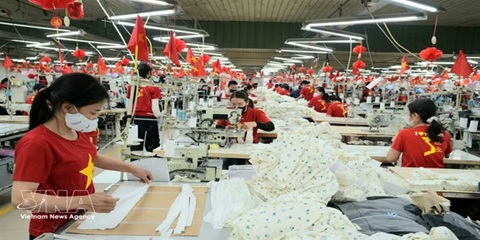
VIỆT NAM TARGETS $48 BILLION IN TEXTILE-GARMENT EXPORTS
Việt Nam’s textile and garment industry is facing both opportunities and challenges amid complex and unpredictable developments in the global market, prompting businesses to improve growth quality, optimise production costs and enhance adaptability in pursuit of an export turnover of about $48 billion this year. The target is considered an important milestone that requires concerted efforts from management agencies and the business community.
INFRASTRUCTURE / CONSTRUCTION / LOGISTIC / PORT
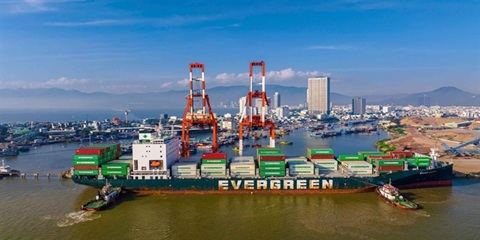
CUTTING LOGISTICS COSTS KEY TO BOOSTING EXPORTS
Reducing costs has become an increasingly urgent priority for import-export activities, particularly logistics costs, a conference in Hà Nội was told on Tuesday. According to Deputy General Director of the Ministry of Industry and Trade's Agency for Foreign Trade, Trần Thanh Hải, import-export activities has remained a bright spot for the economy in recent years, playing an important role and helping drive macroeconomic growth.
Events Sponsors






















